
Few things worry people like watching their hair thin. A wider parting, a receding hairline or a clogged shower drain can quietly chip away at confidence. And in the search for answers, millions of people around the world run into the same flood of oils, shampoos, supplements and “miracle” gadgets.
One option that gets a lot of attention is low-level laser therapy, often shortened to LLLT. It sounds futuristic: a gentle light that wakes up tired hair follicles. But does it actually work? Who is it for? And what should you realistically expect?
Let’s look at the science, the limits and the questions to ask before you spend a rupee.
What Is Low-Level Laser Therapy?
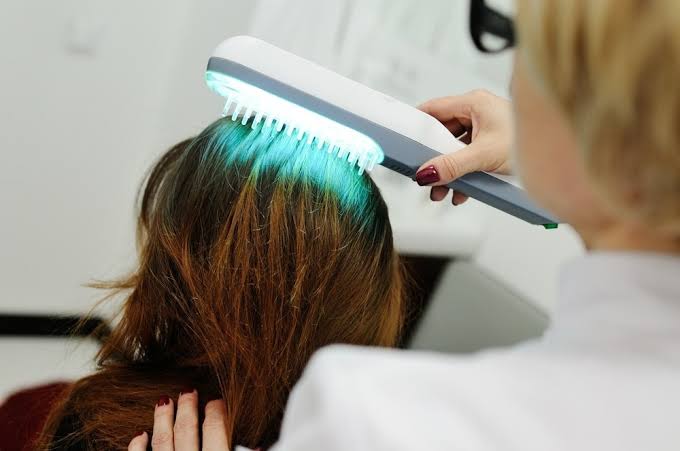
Low-level laser therapy uses low-power red or near-infrared light, applied to the scalp. It’s sometimes called red light therapy or photobiomodulation. The key point is that it’s very different from the strong lasers used to cut tissue or remove tattoos. The light is low-power and doesn’t burn or cut. Most people feel little or nothing during a session, perhaps a mild warmth.
The idea is that light energy may influence the cells in hair follicles, possibly encouraging them to stay in the growth phase longer or to become more active. The exact mechanisms are still being studied.
Why Do We Lose Hair in the First Place?
LLLT isn’t suitable for every kind of hair loss, so understanding the cause matters. Common causes include:
- Androgenetic alopecia (pattern hair loss). This is the most common cause in men and women, driven by genetics and hormones. It tends to progress gradually.
- Telogen effluvium. Temporary shedding after stress, illness, childbirth, crash dieting or certain medicines.
- Nutritional deficiencies, such as low iron or other nutrients.
- Thyroid and hormonal conditions.
- Scalp conditions and infections.
- Autoimmune hair loss, such as alopecia areata.
- Scarring (cicatricial) alopecia, where follicles are permanently damaged.
Treating the wrong problem with the right-sounding device wastes time. That’s why a proper diagnosis comes before any treatment. The American Academy of Dermatology’s hair loss guide is a useful starting point for understanding causes.
Does LLLT Really Work? What the Evidence Suggests
Here’s the honest picture. Some studies, mainly in pattern hair loss, have reported increases in hair density in people who used laser devices regularly over several months, and certain devices have received regulatory clearance for this use in some countries. However:
- Results are modest and vary from person to person.
- The evidence is stronger for early or mild pattern hair loss than for advanced baldness.
- Study quality and device quality differ, so not every product performs the same.
- LLLT is generally considered a supportive or slowing treatment, not a guaranteed cure.
- Benefits usually need consistent use and may fade if you stop.
In other words, LLLT can be a reasonable option for the right person, but it isn’t magic. Be wary of anyone who promises full regrowth.
Who May Benefit Most?
LLLT is more likely to help people who:
- Have early to moderate pattern hair thinning and still have living follicles
- Want a non-surgical, non-invasive option
- Prefer a treatment that doesn’t involve medication, or want to combine it with other treatments
- Can commit to regular sessions for several months
It’s less likely to help if:
- The scalp is completely smooth and bald, with no active follicles
- The hair loss is from scarring conditions or certain medical issues that need other treatment
- You expect dramatic results quickly
How Does a Typical LLLT Programme Work?
Treatment plans differ, but a typical journey looks like this:
- Consultation. A doctor reviews your history, examines your scalp and hair, and identifies the likely cause of the hair loss. Tests may be advised if a medical cause is suspected.
- Treatment planning. If LLLT is suitable, the doctor explains the schedule, expected timeline and any combination treatments.
- Sessions. In-clinic devices, or sometimes home devices such as caps or combs, deliver light to the scalp for a set time. Sessions are usually short and comfortable.
- Regular follow-up. Progress is tracked using photographs and examination.
- Maintenance. Ongoing use may be needed to keep any benefit.
Session numbers and timelines depend on the device and the person. Your doctor will give you a plan for your case. [Add the clinic’s actual LLLT protocol, device and session details.]
Is It Safe?
LLLT is generally regarded as well tolerated, and side effects are usually mild. Some people report temporary scalp tenderness, dryness or mild headaches. Because the light is low-power, it doesn’t cut or burn the skin. Even so:
- Tell your doctor about any medical conditions, medicines that make skin light-sensitive and any history of skin cancer.
- Don’t use devices over open wounds or infections.
- Be careful with cheap, unverified devices, since power and quality vary widely.
- If you’re pregnant or have a health condition, ask your doctor before starting.
LLLT vs Other Hair Loss Treatments
| Treatment | What it is | Typical role |
|---|---|---|
| Topical minoxidil | A medicine applied to the scalp | Common first-line for pattern hair loss |
| Oral medicines | Prescribed by doctors for specific cases | Used under medical supervision |
| LLLT | Low-power light applied to the scalp | Supportive, non-invasive option |
| PRP (platelet-rich plasma) | Your own plasma injected into the scalp | Sometimes used alongside other treatments |
| Hair transplant | Surgical relocation of follicles | Option for more established, stable hair loss |
Many doctors combine treatments, since hair loss is often progressive and one approach may not be enough. Our guide to hair restoration explains the surgical options in more detail. For independent information on hair restoration, you can also visit the International Society of Hair Restoration Surgery.
Seven Questions to Ask Before You Start
- What type of hair loss do I have, and has it been properly diagnosed?
- Is LLLT suitable for my stage of hair loss?
- What results can I realistically expect, and over what time?
- What device is used, and is it recognised or cleared by a regulator?
- How many sessions will I need, and what will it cost in total?
- Will I need to continue treatment to maintain results?
- Are there other treatments I should consider, alone or together with LLLT?
A good doctor welcomes these questions and gives honest answers, including when LLLT isn’t the best choice.
Habits That Support Healthy Hair
No device works well on an unhealthy foundation. Simple habits help:
- Eat a balanced diet with enough protein, iron and other nutrients
- Manage stress and get enough sleep
- Avoid harsh chemical treatments and very tight hairstyles
- Be gentle when washing and combing wet hair
- Treat scalp conditions like dandruff
- Avoid smoking, which may affect hair health
- See a doctor early if shedding is sudden, patchy or severe
Myths About Laser Hair Therapy
“It will regrow a full head of hair.” Results are usually modest, and not everyone responds.
“Any laser cap on the internet works.” Quality and power vary. Ask a doctor before buying.
“It’s only for men.” Women with pattern thinning can also be considered, though suitability depends on the cause.
“Once I stop, I keep the results forever.” Benefits may fade if treatment stops, so ask about long-term plans.
“It replaces a hair transplant.” LLLT can’t replace surgery for advanced baldness. It’s a different tool for a different stage.
Frequently Asked Questions
How long before I see results?
Many programmes involve several months of consistent use before any change is judged. Your doctor can explain what to expect.
Does it hurt?
It’s usually painless. Some people feel gentle warmth.
Can I combine it with other treatments?
Often yes, but ask your doctor, since the best combination depends on you.
Is it permanent?
Not necessarily. Pattern hair loss is ongoing, so maintenance is often needed.
Who should I see for hair loss?
A qualified doctor, such as a dermatologist or a plastic surgeon with experience in hair restoration, who can diagnose the cause first.
About Dr. Jangpreet Singh Multani
According to a HexaHealth profile, Dr. Jangpreet Singh Multani is a plastic and reconstructive surgeon in Jalandhar with MBBS, MS in General Surgery and MCh in Plastic Surgery qualifications. His listed interests include cosmetic surgery, reconstructive surgery, burn care, scar revision and aesthetic procedures. [Confirm qualifications and the clinic’s hair treatment services with the client before publishing.]
To learn more, visit the Multani Plastic Surgery website or read our related guide on scar revision.
The Bottom Line
Low-level laser therapy sits in a sensible middle ground: more than a gimmick, less than a miracle. For some people with early pattern hair thinning, it can be a useful, non-invasive part of a wider plan. For others, a different approach works better. What matters most is a correct diagnosis, honest expectations and a doctor who explains all your options.
If hair loss has been bothering you, don’t spend months guessing. Start with a proper assessment.
👉 Book a consultation at Multani Plastic Surgery and get clear, personal advice.
Visit Multani Plastic Surgery, Jalandhar
Address: SCO 97, Market, opp. Petrol Pump, Phase 2, Urban Estate phase II, Jalandhar, Punjab 144005
Phone: [9872979616]
Website: Multani Plastic Surgery
